Business Development

Why Your Business Has Outgrown Its Structure (And What to Do About It)

I've had some version of this same conversation probably a dozen times in the last two years. A business owner comes to me. Solid company, real revenue, good margins. And somewhere in the first hour they say something like, "I've been meaning to talk to a lawyer about my structure." When I ask what's actually in place, the answer is almost always the same: one entity, everything under one roof, built exactly the way the business was set up when it was a quarter of its current size.

That's not just a legal problem. It's a strategic problem. And it's the strategic part that most people miss because they outsource the whole conversation to their attorney or their accountant and never really sit with what the structure is actually doing for them. Or failing to do.

So let me walk you through what I keep telling them.

The Structure You Started With Was Never Meant to Scale

When most people launch a business, they set up an LLC or an S-Corp, open a bank account, and start working. That makes sense. At $300K in revenue you don't need a complex entity structure. You need customers and cash flow.

But somewhere between $2M and $10M, the business changes in ways that the original structure wasn't designed to handle. You've got real assets now. Equipment, real property, intellectual property, customer contracts, maybe a brand worth something. You've got employees. You've got exposure. And you've got personal wealth that is increasingly tied to the fate of one operating entity that is, by definition, where all the risk lives.

That's the moment when structure stops being a legal formality and starts being a strategic decision.

The operating company / holding company model is the simplest way I know to start separating what generates risk from what generates wealth. Let me break down how it works.

The Basic Mechanic

The operating company (usually called OpCo) is where the business runs. It employs your people, holds your contracts, signs your leases, buys your inventory, takes on your liability. It is, by design, the entity most exposed to the world.

The holding company (HoldCo) sits above it. It owns the OpCo. And more importantly, it owns the assets.

Here's why that matters.

When you run real estate through your operating company, and someone slips and falls, or a contract dispute blows up, or a key customer walks and takes 30% of your revenue with them, everything in that operating company is potentially in play. The real estate, the equipment, the cash reserves, all of it.

Now compare that to a setup where your holding company owns the real estate and leases it back to the operating company. That asset is out of the line of fire. The OpCo still uses it. The HoldCo collects rent. But a creditor or plaintiff coming after the operating company can't touch what the operating company doesn't own.

That's not a loophole. That's just structure. And it's legal everywhere.

The Part Nobody Talks About Enough

Here's where I think the conversation usually stops, and it shouldn't.

Most business owners, when they hear about OpCo/HoldCo, think about it purely in terms of asset protection. Keep the real estate safe. Keep the equipment out of reach. Don't let a lawsuit wipe out everything. That's real, and it matters, but it's only one layer of what this structure actually does for you.

The second layer is operational clarity.

I worked with a manufacturing company a few years back. Good business, solid team, revenues in the mid-eight figures. The owner had built up three distinct business lines over about fifteen years, all running under one entity. Different customers, different cost structures, different margin profiles, but one P&L. You know what that means? Nobody actually knew which business line was making money. They were averaging across everything, celebrating aggregate revenue, and funding underperformance in one division with margin from another without ever naming it as a problem.

When we restructured, each business line got its own operating entity. The holding company owned all three. Suddenly the financial picture became honest. One division was genuinely profitable. One was break-even with a real path to improvement. One was slowly bleeding cash and had been for years. The owner knew the third one was "a little soft" but had no idea it was consuming about $400K a year in cross-subsidy from the other two.

Structure made the truth visible. That's worth something on its own.

What It Signals to the Right People

This one is harder to quantify, but I've watched it play out enough times that I take it seriously.

A properly structured business with a holding company at the top signals maturity. Not in a flashy way. You're not announcing it on LinkedIn or putting it in your pitch deck. But when you're sitting across from a banker, an investor, a prospective partner, or a buyer, the structure of your entities is one of the first things they look at.

A business that's been operating under a single entity for twenty years with assets and operations all mixed together reads a certain way. It reads like a business that never thought seriously about what it was building, or what it might be worth someday.

A business with a thoughtful holding structure, clean intercompany agreements, assets held separately and properly documented? That reads like a business that's been managed with intention. It makes due diligence cleaner. It makes lending conversations easier. It makes a potential acquisition dramatically less complicated.

I'm not saying you should build your entity structure for the benefit of some hypothetical future buyer. What I'm saying is that the habits of mind that lead someone to structure their business well tend to correlate pretty strongly with the habits of mind that build a business worth buying.

Some Real Numbers to Make This Concrete

Say you own the building your business operates out of. It's worth $1.5M. Your operating company has been carrying it on its books, and you've got a lease in place with yourself. Sort of. Informally. The way a lot of owners do it.

If the operating company gets hit with a $2M judgment, and the building is an asset of the operating company, that building is potentially on the table.

Now say the building is held in a separate LLC under your holding company, and there's a legitimate, documented, market-rate lease in place between the building LLC and the operating company. The building is not an asset of the operating company. The judgment creditor can't go after it directly.

I want to be careful here because I'm not your attorney, and the specific protections available to you depend on your state, your industry, your existing contracts, and a dozen other variables. This is also not a magic trick. Courts can and do look through corporate structures when they're clearly fraudulent or when they weren't properly maintained. If you set up a holding company and then operate like the entities don't actually exist, the protection evaporates.

The structure only works if you run it like a structure. Separate bank accounts. Legitimate leases and intercompany agreements with real documentation. Separate financials. Consistent treatment in your accounting. This is where I see people get lazy after they go to the trouble of setting it up.

What "Properly Maintained" Actually Means

This is the part your attorney handles once and then probably doesn't check in on. Which is fine. That's not really an attorney's job. But somebody has to be watching it.

The intercompany lease between your building LLC and your OpCo needs to be at market rate. Not whatever number feels convenient. Actual market rate, documented with at least some reference to what comparable space costs in your market. The IRS and any plaintiff's attorney will look at that number.

The management fee your holding company charges the operating company needs to reflect real services. If HoldCo is providing strategic management, shared services, use of IP, whatever the arrangement is, document what those services actually are. Don't just move money between entities and call it a management fee.

The financials for each entity need to stand alone. A consolidated view is useful for your own strategic picture, but you need to be able to look at each entity and see a real, clean set of books.

I'm not describing a ton of complexity here. I'm describing discipline. And honestly, if you're running a business doing more than $5M in revenue, this level of financial discipline should already be present in your operating company. You're just extending it across a structure.

One Last Thing

The business owners I work with who have the most to lose are often the ones who have been too busy building the business to think about protecting what they've built. That's not a character flaw. That's what happens when you're running hard.

But structure doesn't get easier to fix as the business gets bigger. The assets get more entangled. The tax implications of moving things around get more significant. The window to set this up cleanly tends to be earlier than most people think.

If you've been meaning to have this conversation, with me, with your attorney, with your accountant, with whoever is actually in your corner on this, stop putting it off. The best time to restructure is before you need the protection. The second best time is now.

The Liability Time Bomb Sitting Inside Your Entity Structure

I had a conversation last year with a manufacturing client who had been running his business for eleven years. Good operator. Real revenue. The kind of guy who knows his shop floor better than he knows his own living room. He had built something genuinely worth protecting.

He also had no idea that the way his business was structured had left him personally exposed to a lawsuit that, if it went sideways, could have taken his house.

Not because he was reckless. Not because he skipped any obvious steps. He had an LLC. He had an accountant. He had been doing what most business owners do, which is assume that the entity structure they set up in year one is doing the job it was supposed to do.

It wasn't.

And in my experience, his situation is not unusual. It's practically the default.

The Problem Isn't That You Don't Have a Legal Structure

Most business owners I talk to at the $2M to $10M level have some form of entity in place. S-corp, LLC, maybe a C-corp if they took on early outside investment and someone talked them into it. They went to an attorney at some point, signed some paperwork, paid a filing fee, and considered the box checked.

The issue is that entity structures are not static instruments. They are living documents that are supposed to reflect how your business actually operates, who actually owns what, and where the real risk actually lives inside the organization. When the structure stops matching the reality of the business, you have a problem. And the gap between the structure on paper and the business as it actually runs tends to widen every single year, silently, while you're busy doing everything else.

I've seen it go wrong in a few distinct ways. Let me walk through the ones that come up most often.

The Single-Entity Mistake

The most common structural problem I see is the business owner who has grown a meaningful, multi-faceted operation inside a single entity. One LLC, everything inside it. The equipment, the real estate the business operates from, the intellectual property, the customer contracts, the employees.

This is fine when you're a two-person operation doing $400,000 a year. It's a serious problem when you're doing $8M and your balance sheet has real assets on it.

Here's what that looks like in practice. Let's say you're a landscaping and snow removal company. You've got a fleet of trucks and equipment worth $600,000. You own the property your shop sits on. You've got twelve employees. Everything is sitting inside one LLC.

A customer slips on a property you serviced. Or one of your trucks is in a serious accident. Or a disgruntled employee files a claim. Any one of these scenarios means that every asset inside that entity is potentially exposed to the liability event. The trucks, the real estate, the receivables, all of it is sitting in the same room as the risk.

The standard fix for this is something attorneys call an operating structure with asset protection in mind. You separate the high-risk operating activity from the assets worth protecting. Real estate goes into its own entity, typically an LLC. Equipment goes into a separate holding entity that leases back to the operating company. Intellectual property lives somewhere else. The operating company, the one that's actually touching customers and running the business day-to-day, becomes a lower-asset entity by design.

If something goes wrong in the operating company, there's less for a plaintiff's attorney to chase.

The Handshake Partnership Problem

I work with a lot of businesses that have partners. Two or three founders, or a situation where someone brought in a key person over the years and gave them equity as a way to retain them. These arrangements are often the product of a handshake, or a conversation over drinks, or a one-page agreement that hasn't been looked at since the second Obama administration.

What's usually missing is a real operating agreement that addresses what happens when things go wrong. Not just when things go well.

Who has the authority to take on debt? What happens if one partner wants out? What happens if a partner dies? What are the buyout terms? Who controls the vote when there's a disagreement about a major strategic decision? What happens if a partner gets divorced and their spouse has a claim on their equity?

That last one is not hypothetical. I have seen a partnership dispute get tangled up inside a divorce proceeding in ways that nearly froze the entire business operation. The other partners had no ability to force a clean separation because the operating agreement didn't contemplate it.

A weak or absent operating agreement isn't just a legal loose end. It is a structural liability that can paralyze your business at the exact moment when you need to be operating clearly and decisively.

The Personal Guarantee Accumulation

This one is less about entity structure in the formal sense and more about how the entity structure gets eroded over time through financing decisions.

When a business is growing, it needs capital. Banks and lenders, particularly for businesses in the $2M to $20M range, almost always require a personal guarantee on credit facilities, equipment loans, and lines of credit. That's normal. What's not normal is the business owner who has been operating for eight or ten years and has accumulated personal guarantees across five or six different credit instruments without ever sitting down to look at what the aggregate exposure actually is.

I've done this exercise with clients. We pull every credit instrument, every lease, every financing arrangement, and we map out what the personal guarantee exposure is across the full picture. In more than a few cases, the number has genuinely surprised the owner. They knew about each individual piece, but they had never added them up.

The exposure sitting inside those guarantees is real. If the business hits a rough patch, those guarantees don't care about your entity structure. They go directly to you, personally.

Part of good structural hygiene is understanding where your personal guarantee exposure lives, working to reduce it where you can as the business builds credit history and financial track record, and making sure you are not casually signing new guarantees on instruments that don't actually require them.

The Passive Owner Who Thinks They're Protected

This one is specific to people who have a minority ownership stake or a passive interest in a business they're not actively running. They often assume they're insulated from liability because they're not involved in operations.

That's not always true. Depending on how the entity is structured and what the operating agreement says, a passive owner can still carry exposure in certain scenarios, particularly if they've signed personally on any business obligations or if there are circumstances where the entity's liability protections could be challenged.

Which brings me to something that doesn't get enough attention.

Piercing the Veil Is Not Just a Legal Concept for Textbooks

Courts can, under the right circumstances, disregard your entity structure entirely and hold owners personally liable. This is called piercing the corporate veil. It sounds dramatic. It's not as rare as you'd like it to be.

The conditions that invite it are often things business owners do casually without realizing the implication. Commingling personal and business finances. Failing to maintain basic corporate formalities, like annual minutes or resolutions for major decisions. Using the business bank account as a personal slush fund. Undercapitalizing the entity from the start.

I've talked to business owners who run profitable companies and have been, for years, moving money between business and personal accounts in ways that would make an attorney very uncomfortable. Not because they're trying to hide anything. Just because it's convenient and no one ever told them it mattered.

It matters. The operational hygiene around your entity structure is part of the legal protection the structure is supposed to provide. If you're not running the entity like it's a separate legal person, a court may decide it isn't one.

So What Do You Actually Do With This

The first thing is to stop assuming the structure you set up is still the right structure. Pull out the documents. Read them. Look at your current business and ask whether the entity structure reflects how the business actually operates today.

Then get a conversation going with an attorney who does this specific kind of work, and do it alongside a financial advisor who can read your balance sheet and understand where the real asset exposure lives. These conversations work best when legal and financial are talking to each other, not in separate silos.

The things you're looking for are pretty specific. Does the structure separate high-risk operating activity from high-value assets? Does the operating agreement contemplate the actual scenarios that could disrupt the business? Do you know your total personal guarantee exposure across every instrument? Are you maintaining the basic formalities that keep the entity's protections intact?

None of this requires a complete overhaul in most cases. Sometimes it's a few targeted changes. Sometimes it's adding an entity. Sometimes it's updating an operating agreement that hasn't been touched since the business looked completely different.

The point is that you built something worth protecting. The entity structure is supposed to be the thing that protects it. If it hasn't been reviewed in three or more years, there's a real chance it isn't doing that job anymore.

You Are Almost Certainly Underpriced (And Here's How to Know for Sure)

I've had some version of the same conversation probably forty times in the last few years. I'm sitting across from a business owner, sometimes literally, sometimes on a Zoom call , and they're showing me their numbers. Revenue looks reasonable. The business is moving product or delivering services. Employees are getting paid. And yet something is wrong, and they can't quite name it.

So I ask the question I almost always ask early on: when did you last raise your prices?

The pause that follows tells me everything.

Sometimes they say "last year" and mean they added two percent to cover a vendor increase. Sometimes they laugh a little nervously and say they haven't really touched pricing since they started. Sometimes they give me a number and then immediately start explaining why they can't go higher because of competition, or customers, or the market, or some story they've been telling themselves so long it feels like fact.

Here's what I know after years of looking at P&Ls, building financial models, and working with businesses across a pretty wide range of industries and revenue levels: underpricing is one of the most common and most quietly destructive things happening in small and mid-size businesses right now. It's destructive precisely because it's invisible. The business keeps running. The owner keeps grinding. Nobody sends you an alert that says "hey, you've been leaving money on the table for six years."

So let me give you the alert.

The Math Nobody Wants to Do

Let's start with something concrete. Say you're running a $5M revenue business with a 10% net margin. That's $500K to the bottom line, which sounds fine until you look at how hard you're working for it.

Now imagine you raised your prices by 8% across the board and lost 10% of your customers as a result. That sounds scary. Owners hear "lose customers" and they freeze.

But run the math. You had $5M in revenue. You raise prices 8%, so now your average transaction or contract is worth 8% more. You lose 10% of your volume. You're now at roughly $4.86M in revenue. But here's the thing — your costs didn't go up. Your payroll didn't change. Your overhead didn't change. Your cost of goods didn't change. That 8% price increase flowed almost entirely to the bottom line on the revenue you retained.

Your margin just got materially better on a slightly smaller revenue number. And you're doing less work.

That's not a hypothetical. That's how pricing leverage actually functions. Michael Porter spent a career writing about competitive advantage, and the most durable form of it (the one that doesn't require you to out-hustle everyone forever) is the ability to charge more than your competitors for something customers believe is worth more. Most owners are so focused on the volume side of the equation that they never really interrogate the price side.

The Story You're Telling Yourself About Your Customers

The number one reason business owners underprice isn't competition. It's not the market. It's not the economy.

It's a story about their customers.

Specifically, it's the belief that their customers are more price-sensitive than they actually are. I hear this constantly. "My customers are very price-conscious." "This is a price-driven market." "If I go up, they'll go somewhere else."

Maybe. But how do you know? Did you test it? Did you raise prices on a segment and watch what happened? Did you survey anyone? Or are you running a multi-million dollar business on a hunch that you formed sometime around year two and haven't revisited since?

I worked with a commercial cleaning company a few years back, solid operation, about $3.5M in revenue. Owner was convinced his market was entirely price-driven because he'd lost a couple of bids to lower-cost competitors early on. So he'd been keeping his pricing at the low end of the market for years. When we actually looked at his churn rate, his customer retention was exceptional — well above industry average. His customers weren't leaving him. They weren't even negotiating hard at renewal. They were staying because the service was reliable and his team was professional.

He wasn't competing on price. He was winning on reliability. He just hadn't updated his mental model to match the reality his own numbers were showing him.

We raised prices 12% at the next contract cycle. He lost two customers out of a book of several dozen. The ones who left were his two most demanding, lowest-margin accounts. His revenue went up. His stress went down. And he told me it was the best business decision he'd made in five years.

The Signals That Tell You You're Underpriced

You don't need a consultant to tell you whether you're underpriced. You need to be honest with yourself about a few things.

First: how often do customers push back on your prices? I mean really push back, not just ask a clarifying question. If you quote a price and people say yes quickly and consistently, that is not a sign that you've nailed your pricing. That is a sign that you are below market. Friction in the sales process isn't always bad. A customer who pauses, asks a question, and then says yes is a customer who was making a real decision. A customer who says yes immediately every time is a customer who thinks they're getting a deal.

Second: what is your close rate on new business? If you're closing eight or nine out of ten quotes, you might think that means you're great at sales. It might mean that. It might also mean you're cheap. A healthy close rate for most B2B service businesses is somewhere in the 50-70% range. If you're significantly above that, your price is doing the selling for you, and that should make you uncomfortable.

Third: look at your best customers and ask what they actually value. Not what you think they value. What they tell you, what they come back for, what they refer other people to you for. If the answer has anything to do with quality, reliability, expertise, speed, or trust, then you are not competing on price. You are competing on value. And if you're competing on value, you should be priced like it.

Fourth: when did you last raise prices? If the answer is "not recently" or "we kind of adjust here and there," then inflation alone has been cutting into your margin for years. Costs go up. Wages go up. Fuel, materials, insurance, software subscriptions — all of it drifts up. If your prices haven't kept pace, your margin has been quietly eroding even if your revenue looks fine on the surface.

How to Test This Without Blowing Up Your Business

You don't have to raise prices across the board overnight. In fact, I'd argue you shouldn't.

What you should do is run a pricing test. New customers only. Take your standard rate and go 10-15% higher for the next thirty days. Track your close rate. If it doesn't change, you just found your new price floor. If it drops slightly but the customers you close are more profitable and less difficult, you probably still came out ahead.

You can also segment by account type. Your longest-tenured customers, the ones who have been with you for years and rarely complain and refer other people? They are almost certainly your most price-inelastic customers. They're not staying with you because you're cheap. They're staying because switching costs are high and trust is established. A quiet, well-explained price adjustment to that segment , framed not as a rate hike but as a reflection of what the relationship has grown into, will land better than you expect.

And for love of all things reasonable, stop competing on price with customers who are already selecting you for other reasons. If someone hires a specialized manufacturing consultant or a premium landscaping firm or a regional accounting practice because of expertise and track record, they are not also shopping on price. They've already made a values-based decision. Pricing yourself like a commodity is an insult to the relationship you've built.

The Actual Problem Underneath the Pricing Problem

Here's the thing I usually have to say out loud before it lands: underpricing is often not really about pricing. It's about confidence. It's about whether you actually believe the thing you're selling is worth more than what you're charging for it.

James Clear would probably frame this as an identity problem. You've built an identity around being accessible, being reasonable, being the person who doesn't nickel and dime. And those are genuinely good qualities. But there's a version of that identity that tips over into undervaluing your own work, and a lot of owners are living in that version right now without realizing it.

Your pricing is a signal. To your customers, it says something about what you think your work is worth. To your market, it places you in a competitive tier. To your own team, it says something about the kind of business you're building.

If the signal you're sending is "we're the affordable option," make sure that's intentional.

You're Probably Leaving 20% on the Table and Calling It a Pricing Strategy

I had a conversation last year with the owner of a mid-size specialty fabrication shop in the Pioneer Valley. Good business. Solid reputation. Customers who had been with them for years. They were doing somewhere around $8 million in revenue and the owner, a guy who had spent twenty years perfecting his craft, was exhausted. Margins were thin. Every time material costs ticked up, he felt it in his gut before he ever saw it on a statement.

I asked him how he priced his work. He looked at me like I had asked him something obvious. "I figure out what it costs me to make it, and I add a margin on top."

There it is. The trap.

Cost-plus pricing is the default setting for most business owners who came up through operations, trades, manufacturing, or any field where the work itself was the thing they mastered. You know your costs, you add a number, you call it a price. It feels rational. It feels fair. And it is quietly one of the most expensive habits in your business.

I'm not saying this to be provocative. I'm saying it because I keep seeing the same structural problem inside companies that are otherwise well-run, and the pricing model is usually the last thing anybody wants to touch.

What Cost-Plus Pricing Actually Tells Your Customer

Here's the thing that most pricing conversations miss entirely. Price is not just math. It's a signal. Before a customer ever uses your product or your service, your price tells them a story about what they're about to buy.

When you price based on your costs, you are anchoring your price to something your customer has absolutely no reason to care about. They don't care what your materials cost. They don't care what you're paying your production crew this week. They care about what the thing is worth to them.

Michael Porter spent a lot of time writing about the difference between cost leadership and differentiation as strategic positions, and one of the things that gets glossed over in that framework is the implication for pricing. If you're not competing on price as a deliberate strategic choice, then your price should not primarily be a function of your cost structure. It should be a function of the value you deliver.

That sounds clean and obvious until you try to actually do it, which is where most owners check out of the conversation.

The Part That Actually Hurts

Cost-plus pricing doesn't just leave money on the table. It creates a business that is structurally fragile in a specific way. Let me explain what I mean.

When your price is tied to your costs, your margin is essentially fixed. You make your markup on whatever you spend. So when costs go up, which they do, always, eventually, your options are to pass it along to the customer and have an uncomfortable conversation, absorb it and watch your margin compress, or find some operational efficiency to make up the difference. That's it. That's the menu.

The business I mentioned above was doing the third thing. He was squeezing operations relentlessly trying to protect a margin that was already thin because the pricing model gave him almost no room. He was working harder to defend a margin he could have built differently from the start.

More importantly, when your price is cost-derived, you are almost certainly underpricing the jobs where you deliver the most value. Think about it. The project that requires your rarest expertise, your most senior people, your deepest institutional knowledge — under cost-plus, it gets priced based on labor hours and material costs, not on what it's actually worth to the client. You're charging the same markup on your most differentiated work as you are on your most commoditized work.

That is a problem.

What You Should Be Using Instead

Value-based pricing is the alternative, and before you tell me that it doesn't work in your industry or that your customers would never go for it, I want to push back on that. Not because every customer will pay a premium. They won't. But because you are very likely leaving money on the table with specific segments of your customer base, on specific types of work, and you're doing it on purpose because the math feels safer.

Value-based pricing means you start with the question: what is this worth to the person buying it? Not what does it cost me to produce. What does it solve, prevent, enable, or accelerate for them?

A landscaping company I worked with was doing $3.5 million in revenue, heavy on residential maintenance contracts and some commercial work. Their pricing was entirely cost-derived. Labor plus materials plus a markup they had been using since the owner started the business a decade earlier. We went through their customer list and started categorizing the work by what it actually did for the customer. Basic lawn maintenance at one end. On the other end, high-end residential installation projects for homeowners who were entertaining constantly and for whom the outdoor space was genuinely a lifestyle asset.

Those are not the same product. They should not carry the same margin logic. For the homeowner who is hosting gatherings every other weekend and whose backyard is essentially a functional extension of their identity, the question is not what does this cost to install. The question is what does a flawless outdoor space mean to that person. That's a completely different pricing conversation, and it's one most contractors never have because they default to the number that feels safe and justifiable.

We repriced the high-end residential work based on scope, complexity, and the profile of the customer. Revenue held, volume on that segment stayed consistent, and margin on those jobs improved by something close to 30 percent without a single additional dollar of cost.

"But My Customers Compare Prices"

Yes. Some of them do. And those customers are probably not your most profitable anyway.

There's a segment in almost every business that buys on price. They will shop you, they will squeeze you, and if someone offers them the same thing for 4 percent less they will take it. You cannot win that game with value-based pricing and you should probably stop trying to.

But there is another segment, and in most of the businesses I work with it's larger than the owner realizes, that is not primarily buying on price. They're buying on reliability, expertise, relationship, speed, or the reduction of some specific risk they have. Those customers will pay more for the right thing from the right provider. The problem is that when you use cost-plus pricing across the board, you never build the capacity to have that conversation. You don't even know you're having the wrong one.

James Clear has this framing about systems versus goals, and there's a version of it that applies here. Cost-plus pricing is a system that is perfectly designed to produce thin margins at scale. If that's what you're getting, the system is working exactly as designed.

How to Start Moving Off It

You don't have to blow up your entire pricing model this quarter. But there are some concrete things you can do right now.

First, segment your customers and your work by the value you deliver, not by the size of the job or the customer. What problems are you actually solving? Where is your expertise genuinely rare or difficult to replicate? Those are the places where cost-plus is costing you the most.

Second, go look at your highest-margin jobs from the last two years. Not the biggest jobs. The highest-margin ones. I would bet you money that those jobs share characteristics. Certain types of customers. Certain types of problems. Certain conditions under which you work best. That is your value-based pricing signal right there, sitting in your own data.

Third, start having a different conversation on proposals. Instead of building your price up from costs and presenting a number, start with what the customer is trying to accomplish and quantify the value of getting that outcome. What does it cost them if this doesn't get done, gets done wrong, or takes twice as long? Once you establish that context, your price looks very different.

None of this is easy and I want to be honest about that. Changing your pricing model is uncomfortable in ways that feel existential when you're in the middle of it. Customers ask questions. Sales cycles change. You lose some deals you would have won before. That's real.

But here's what I have watched happen over and over when owners finally make this move seriously. Revenue goes up. Margins improve. And the work itself gets better because you start attracting customers who actually value what you're best at.

The fabrication shop owner I mentioned at the top? We spent about three months rethinking how he priced his most specialized work, the jobs that only a handful of shops in the region could even handle. He pushed back on almost every step. By the end of the year, he was doing slightly less revenue and making significantly more money. He also, for the first time in a long time, felt like the price he was charging actually reflected what he was worth.

That's not a small thing.

Your Small Business Guide To Staying Profitable In Uncertain Times: 2023 Edition

Running a small business can be a rewarding endeavor, but it also comes with its fair share of challenges. One such challenge is managing uncertain economic conditions and the increasing pressures of inflation. In this case, we will explore effective strategies and practical steps that small business owners can take to stay profitable in the face of these challenges. Through the story of a fictional small business owner named Sarah, we will examine the various aspects of business management that can help her navigate uncertain times.

Paired Down From A Recent Client Case Background:

Sarah owns a boutique clothing store in a bustling city. For the past few years, her business has been thriving, but recently she has noticed signs of uncertainty in the economy. Inflation rates are rising, and consumer spending patterns have become unpredictable. Sarah is concerned about maintaining profitability and ensuring the long-term sustainability of her business.

Analysis and Recommendations:

Monitor Market Trends:

Sarah needs to stay up-to-date with market trends and economic indicators. By closely monitoring changes in consumer behavior, industry trends, and economic forecasts, she can anticipate potential challenges and adapt her business strategies accordingly. Regularly reviewing financial reports, such as profit and loss statements, will provide insights into the overall health of her business.

Diversify Product Range:

To mitigate the impact of inflation, Sarah should consider diversifying her product range. By offering a variety of price points, she can cater to different customer segments and ensure continued sales even if some customers become more price-sensitive. Sarah can introduce lower-cost alternatives alongside her existing high-end products to maintain a balanced offering that appeals to a wider customer base.

Streamline Operations:

Efficiency is crucial during uncertain economic conditions. Sarah should conduct a thorough review of her business operations to identify areas where she can reduce costs and streamline processes. This might involve renegotiating supplier contracts, optimizing inventory management systems, or adopting technology solutions that automate repetitive tasks. By cutting unnecessary expenses and improving operational efficiency, Sarah can enhance her business's profitability.

Customer Relationship Management:

Building strong relationships with customers becomes even more critical during uncertain times. Sarah should focus on providing exceptional customer service and personalized experiences to create loyalty. Implementing a customer relationship management (CRM) system can help her track customer preferences, tailor marketing efforts, and offer targeted promotions. Maintaining open lines of communication with customers will enable her to understand their changing needs and adjust her product offerings accordingly.

Pricing Strategies:

Inflation can lead to increased costs for Sarah's business. To maintain profitability, she needs to review her pricing strategies. Rather than implementing across-the-board price increases, Sarah can consider adopting dynamic pricing models that take into account market conditions and customer demand. Offering bundled deals, discounts for loyal customers, or introducing loyalty programs can also help incentivize repeat business.

Cost Control and Expense Management:

Inflationary pressures often lead to higher expenses, such as increased rent, utility costs, or raw material prices. Sarah should review her business expenses meticulously and identify areas where costs can be controlled. Negotiating with suppliers for better terms, exploring alternative sourcing options, and embracing energy-efficient practices can help reduce overheads. Regularly assessing and optimizing expenses will contribute to maintaining profitability.

Cash Flow Management:

During uncertain economic conditions, managing cash flow becomes paramount. Sarah should develop a detailed cash flow forecast to anticipate potential gaps and plan accordingly. She can negotiate extended payment terms with suppliers, incentivize early customer payments, and consider establishing relationships with alternative lenders for short-term financing if needed. Maintaining a healthy cash flow will provide Sarah with the flexibility to navigate through economic uncertainties.

Marketing and Promotions:

While reducing costs is essential, Sarah must continue investing in effective marketing strategies. Rather than relying solely on traditional advertising, she should explore cost-effective digital marketing channels such as social media, email marketing, and search engine optimization. By targeting the right audience with compelling messaging, Sarah can attract new customers and retain existing ones, even during challenging economic times.

Conclusion:

In uncertain economic conditions with increasing inflation pressures, small business owners like Sarah face numerous challenges. However, by adopting proactive strategies and taking practical steps, they can stay profitable and ensure the long-term success of their businesses. Regularly monitoring market trends, diversifying product offerings, streamlining operations, focusing on customer relationships, implementing effective pricing strategies, controlling expenses, managing cash flow, and investing in targeted marketing efforts are crucial elements of successfully navigating through uncertain times. With determination, adaptability, and strategic planning, small business owners can overcome challenges and thrive even in the face of economic uncertainties

Can Your Business Keep Up? Customer First Disruption & Innovation

Let’s start with a cliché - You know you need to change something in your business but you’re not sure where to start, what you should be doing or if you even have time to try something.

If you’re a small service or retail businesses you don’t need a blog post telling you that you face numerous challenges in remaining competitive and most importantly relevant. To thrive in an era of constant change, it is essential for small businesses to embrace disruption and innovation. By leveraging these principles, local businesses serving communities within a 10-mile radius can unlock tremendous opportunities for growth, increased customer satisfaction, and improved business outcomes. In this blog post, we will explore how small businesses can effectively utilize disruption and innovation to drive success.

Understanding Disruption and Innovation - A quick and dirty definition or two.

Before diving into the strategies, let's briefly define disruption and innovation in the context of small businesses.

Disruption refers to the process of challenging traditional norms, approaches, and business models to create new value propositions and reshape the market. It involves identifying and seizing opportunities that others may overlook, thereby gaining a competitive edge.

Innovation, on the other hand, encompasses the creation and implementation of new ideas, products, services, or processes that bring about positive change. It involves fostering a culture of creativity, continuous learning, and adaptability within the organization.

Now that we have a basic understanding of the concepts, let's explore how small businesses can harness disruption and innovation to enhance their business outcomes.

Embrace Technology

Technology has become an indispensable tool for businesses of all sizes. By leveraging digital tools, small businesses can streamline operations, improve efficiency, and enhance customer experiences. Here are some ways to do it:

a) Online Presence: Establish a strong online presence through a well-designed website and social media platforms. This will expand your reach, engage customers, and attract new ones within your local community.

b) E-commerce: Explore the world of e-commerce by setting up an online store. This enables customers to shop conveniently from their homes and provides an additional revenue stream for your business.

c) Mobile Apps: Consider developing a mobile app that offers unique features, loyalty programs, and personalized offers. This can enhance customer engagement and loyalty.

Customer-Centricity

In today's competitive landscape, customers have come to expect personalized experiences and exceptional service. By focusing on customer-centricity, small businesses can differentiate themselves and build long-lasting relationships. Here's how:

a) Understand Customer Needs: Invest time in getting to know your customers. Conduct surveys, gather feedback, and analyze data to gain insights into their preferences, pain points, and expectations.

b) Tailor Products and Services: Use the insights gained to customize your offerings to meet customer demands. This can involve personalized recommendations, flexible payment options, or special packages tailored to local preferences.

c) Exceptional Customer Service: Train your employees to deliver outstanding customer service. Respond promptly to inquiries, resolve issues promptly, and go the extra mile to exceed expectations.

Collaborate and Network

Small businesses serving local communities can leverage collaboration and networking to their advantage. By partnering with other local businesses or community organizations, you can create mutually beneficial opportunities and increase your visibility. Consider the following:

a) Co-Marketing Initiatives: Collaborate with complementary businesses to create joint marketing campaigns, share resources, or host local events. This cross-promotion can expose your business to new audiences and boost sales.

b) Community Involvement: Participate in community events, sponsor local initiatives, or join industry associations. This involvement builds goodwill, strengthens relationships, and positions your business as an integral part of the community.

Foster a Culture of Innovation

Innovation thrives in environments that encourage creativity, risk-taking, and continuous learning. Small businesses can create such a culture by implementing the following practices:

a) Employee Empowerment: Encourage employees to contribute their ideas, suggestions, and feedback. Create channels for open communication and recognize and reward innovative thinking.

b) Learning and Development: Provide opportunities for professional growth and development. Support employees' attendance at workshops, seminars, and industry conferences to foster a culture of continuous learning.

c) Experimentation and Iteration: Encourage experimentation and the freedom to fail. Embrace a mindset that views setbacks as learning opportunities, enabling your business to evolve and adapt quickly.

In today's rapidly changing business landscape, small service and retail businesses serving local communities must embrace disruption and innovation to thrive. By leveraging technology, prioritizing customer-centricity, collaborating with others, and fostering a culture of innovation, small businesses can unlock tremendous opportunities for growth and improved business outcomes. Remember, change is the only constant, and by embracing it with open arms, your small business can flourish and remain competitive in the local market. So, be bold, be innovative, and watch your business soar to new heights!

Use QuickBooks (or whatever you're using to keep track of your financials) to make better business decisions!

Hey there, I can’t believe it’s been FOUR YEARS. I really dropped the ball here but we are back. I want to start off by helping you build a process for using QuickBooks (or whatever you’re using to keep track of your financials) to build better forecasts so you can make better decisions in your business.

If you're looking to make better financial decisions for your business, you're in the right place. In this blog post, we'll be discussing how you can use forecasts built in software like QuickBooks to make informed decisions based on the data you collect on a daily basis.

First things first, what is forecasting? Simply put, forecasting is the process of estimating or predicting future events or trends based on historical data. In the context of business, forecasting can help you predict future revenue, expenses, and cash flow, among other things.

Now, you might be thinking, "That sounds great, but how do I even begin to forecast for my business?" Well, that's where software like QuickBooks comes in. QuickBooks is a cloud-based accounting software that can help you track your income, expenses, and other financial data on a daily basis. The software also has built-in forecasting tools that can help you make informed decisions based on your financial data.

So, let's get started. Here are the steps you can take to make better financial decisions using QuickBooks' forecasting tools:

Step 1: Collect and input your financial data into QuickBooks

Before you can start forecasting, you need to make sure you have accurate and up-to-date financial data. This includes your income, expenses, assets, liabilities, and cash flow. You can input this data into QuickBooks manually, or you can connect your bank accounts and credit cards to QuickBooks to automatically import your financial transactions.

Step 2: Set up your forecasting preferences in QuickBooks

Once you have your financial data in QuickBooks, you can start setting up your forecasting preferences. QuickBooks has a variety of forecasting tools that you can use, depending on what you want to predict. For example, you can forecast your cash flow, revenue, expenses, and more. To set up your forecasting preferences, go to the "Reports" tab in QuickBooks and select "Forecast."

Step 3: Choose your forecasting method

There are several methods you can use to forecast your financial data in QuickBooks. Some of the most common methods include:

Trend analysis: This method involves looking at historical data to identify patterns and trends, and then using those patterns to predict future outcomes.

Seasonal analysis: This method involves looking at seasonal patterns in your financial data to predict future outcomes.

Regression analysis: This method involves using statistical analysis to identify relationships between different variables, and then using those relationships to predict future outcomes.

QuickBooks has built-in tools that can help you use these methods to forecast your financial data. You can choose the method that works best for your business, or you can use a combination of methods to get a more accurate forecast.

Step 4: Review your forecast and make adjustments

Once you have your forecast, it's important to review it regularly and make adjustments as needed. Your forecast is only as good as the data you put into it, so if your financial data changes, your forecast will need to change too. Regularly reviewing and adjusting your forecast can help you make better financial decisions and stay on top of your business's finances.

Step 5: Use your forecast to make informed decisions

Finally, once you have your forecast, you can use it to make informed decisions for your business. For example, if your forecast predicts a cash flow shortfall in the coming months, you might decide to delay purchasing new equipment until you have more cash on hand. Or, if your forecast predicts an increase in revenue, you might decide to hire a new employee to help you handle the extra workload.

The key is to use your forecast to make informed decisions based on your financial data. This can help you avoid financial surprises and make sure your business is always on the right track.

So there you have it! By using forecasting tools in software like QuickBooks and analyzing the data you collect on a daily basis, you can make better financial decisions for your business. Remember to collect and input your financial data into QuickBooks, set up your forecasting preferences, choose the right forecasting method, review and adjust your forecast regularly, and use your forecast to make informed decisions.

Financial forecasting is a powerful tool that can help you stay ahead of the game and make smarter choices for your business. So why not give it a try? Your business's financial success could depend on it!

Monday Memes Ch 3: Baby Yoda & Burn Out

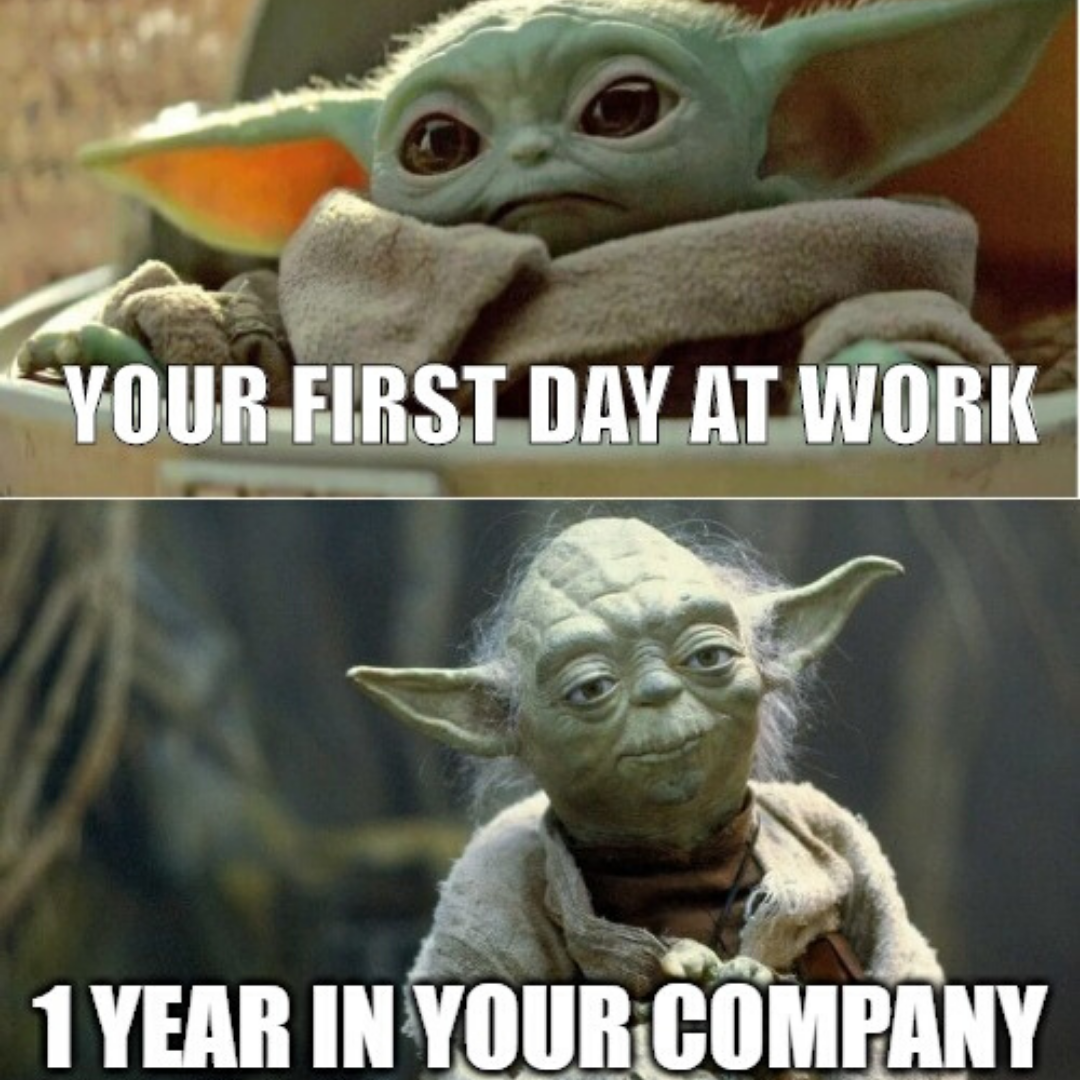
Baby Yoda Work .png

Baby Yoda is the best. I don’t think I’ve seen a bad one of these memes yet! Before I get sucked into another Baby Yoda meme image search let’s just jump right into this week’s Monday Meme. 

Piggybacking on last week’s post, I want to see if you’re playing Simon Sinek’s Infinite Game when it comes to how choose to work every day? 

If you haven’t read his book yet or watched the video I posted about Sinek’s Infinite Game approach (it’s absolutely worth it), the gist of it is moving away from trying to “win” business and towards making choices that will keep the business going as long as possible. The emphasis is on creating a business that truly centers on people, culture, and mission instead of trading resources or encouraging environments that reward short term gains. It’s so good! 

The Baby Yoda memes and new Simon Sinek book have a lot in common this time of year. December is the perfect time of year for a little reflection and more importantly, it’s a time to look at what you’re going to do next. Is how you got to where you are now going to be right for helping you get to where you want your business to go in 202? It forces you to really look at how you’re showing up every day and honestly assessing the things that are motivating the choices you’re making in your business. 

Big picture, a year isn’t all that long when it comes to building a business. If you started in January and feel like Old Yoda now then you’re exactly who should be taking time to think about what 2020 is going to look like for you. I would challenge you to think about the following things: 

1. How do you decide which tasks or goals get priority over others in your business? 

2. Is the work you’re doing still aligned with why you started doing the work in the first place? 

3. How did you set your goals for next year? Have you even set them yet? 

4. Are the metrics you track daily/weekly/monthly/yearly supporting why you’re doing this work or some arbitrary short term financial or vanity goal? 

I’m not saying that you’re not going to be burnt out or have seasons of work that feel like they are aging your horribly from time to time. I want to challenge you to look at how and why you’re working to make sure that you aren’t creating an environment or expectations that are unsustainable from the start. When you burn out for the last time at work, everyone loses. 

Long term success means making choices that put people first - from keeping up with the changing tastes and expectations of your consumers to you making sure the work you’re doing every day is still aligned with why you wanted to do it when you started.


Just Cause > Your Current Mission Statement: The Infinite Game

Let’s just start by saying that I’m a huge fan of Simon Sinek. I use his YouTube videos in my business classes and I’ve worked some of his processes into my own client work. I’m a big fan of the research he does and how he gets his ideas out into the world. It shouldn’t be a surprise when I share that I really loved his new book “The Infinite Game”. Not because I wholeheartedly identify with his “just cause” but, at this book’s core it’s about helping people make better decisions. It’s a framework that will help those better serve the people to which they are responsible because they know that every growth metric in every business starts with someone (employee, customer, prospect, audience) making a choice. The icing on the cake for me is seeing him frame concepts like game theory, opportunity cost, and a bunch of fun behavioral economics stuff in a you-don’t-need-to-be-an-economist-to-use-this-everyday kind of way.

Plus, I am all about helping make people better business and organizational decisions.

This post isn’t just a love letter to this book. (It’s definitely not hard for me to keep gushing about it though!) I wanted to challenge you to think about how the work you’re doing in your business supports your vision for the future.

Vision for the future? You might not have one right now but it’s important. When you’re connecting what you do, what you’re building, and who you’re cultivating to a future you want to see things get interesting. Interesting because the choices you make from that mindset is going to be very different, way more sustainable, than those made from just optimizing your business in 90-day sprints or worse just focusing on the next transaction.

To help you think through finding your vision I’ll share a bit about his first practice and include the video he created to accompany the concept in his framework - identifying your “just cause”. The broad stroke is getting to a cause and communicating it so that your employees, or the people that support you, would be willing to sacrifice their own interests to advance that cause?

That’s a bigger deal than most people think. In order for someone to trade their dollars earned, their time, their knowledge, or their attention for what you’re working on they have to believe it’s going to make a difference in their lives. Sure, there’s the instant utility of getting a solution to a today problem but consumption now is more than just a vote for maximizing utility.

Building a business that will last demands that you do more than just quickly cobble together mission or vision statements full of vague business platitudes. In the past, I’ve written that one of my biggest business-owner pet peeves is when they put things like “best customer service” or “highest quality product” in the middle of their mission statements. I’ll save the rant for now and offer a link to one of those posts titled, How to W.I.N. Everyday.

This time of year is great for doing a bit of reflection and working out the things that are really important to you and to your business. So important that you either created or are supporting a business that shares those values and ideas about what a better future looks like. Then go back to your mission, vision, and values and audit them against the value rubric you’ve just created. How does it hold up? I’m willing to bet that, for most of you, it could use a little work. Here’s an Amazon link to his book The Infinite Game if after you watch the video you decide that you need more Simon Sinek in your life.

Which, of course, you will.

Monday Memes Ch 2: Easy Wins

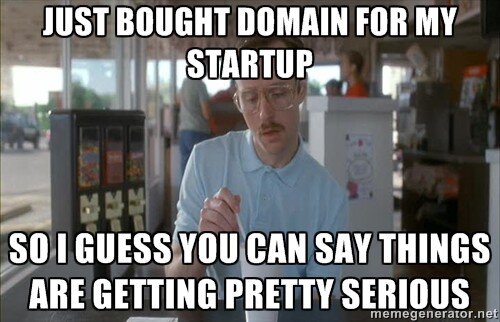
DomainMeme.jpeg

It’s easy to think that you’re making progress in your business when you’re doing stuff that feels like work. It feels like progress to sit at a keyboard (or literally anywhere with your phone), head to a to your favorite domain registrar, and spend anywhere from a few bucks to a few thousand securing the perfect domain for your business. Or in some cases, mine included, a bunch of domains.

Is that real progress though? Did buying those domains directly contribute to supporting the next person that needs your product, service, or expertise? If an entrepreneur buys a domain but no one ever finds it or buys anything, is it really a business?

Probably not - to all three questions.

That’s not a bad thing though. Buying domains, building websites, and doing all the things that help people find you is definitely necessary when you’re building a business and a brand that you intend on standing behind for the long haul. Necessary and (not but) is only a small part of what goes into building a business.

I picked this meme today because I see and hear stuff like this all the time. I’ve witnessed tons of would-be entrepreneurs buy domains and pour time, money and resources into building a platform that they ultimately do nothing with. So, I wanted to bring some awareness and challenge you if you’re someone like this to do a bit of real reflecting.

Why?

Because the feel-good chemicals that your brain releases when you feel like you’re being productive are easy to come by when you’re doing things like buying domains, setting up social profiles and even writing a blog post. Ego is definitely not a friend to the entrepreneur. Especially once all that stuff is done and you’re knocking on the door of the deeper work that is required to get you to the next phase of building a business starts all those good feels instantly start to evaporate. They evaporate because the work required to get found, make a sale and deliver on a promise means that they’re dependent on someone else. A customer has to trust you enough to say yes to you and believe that you can do what you said you can do for the next dose of validation. Then you have to deliver on your promise and again wait for the feedback.

It’s a pretty volatile process.

I tell my economics students that people are utility-maximizing machines. Your brain is designed to help you make choices about how you expend your cognitive resources in service of providing you with experiences that maximize how good you feel (or at least minimize the bad). Business ideas die after you buy a few domains and build a site because your brain instantly weighs the opportunity cost of the continued commitment to growing and the risks that come with putting yourself out there and being rejected against the possible gains that come with success. It’s tough to reasonably predict those gains for brains especially if you’ve never experienced the kind of success you’re looking for.

For some though it’s an easy choice, their passion and belief create enough of a benefit to outweigh the perceived costs. For them, it’s not that they don’t think the same things or have different brains it’s that they approach the formulas giving variables slightly different weights. They have the capacity to sit with all the social, financial, emotional, and any other risk you can think of a little longer. For the businesses that seem to never progress past the domain buying phase, it’s the opposite - the juice wasn’t worth the squeeze right out of the gate.

At this point, this post is probably reading like I’m romanticizing the risk-takers and am dooming those that are more risk-averse when it comes to building a business. That’s definitely not my intention. What I want to do is challenge you to think about why you bought those domains, what were your intentions when you started, and ask how committed you are to the long process that comes with being an overnight success.

If you bought the domains then there was a spark of entrepreneurial life in that idea. It might be worth some additional vetting (here’s a link to post I wrote all about how to vet your idea) and just a little more work to figure out if you were just chasing the rush that comes with telling people you're an entrepreneur or if you actually have a real business on your hands.

Lastly, and borrowing from Marie Forleo, “Everything is figureoutable!”.

How To Make Better Business Decisions

Ogres, Onions & Strategy.png

Discover & share this Shrek GIF with everyone you know. GIPHY is how you search, share, discover, and create GIFs.

Ogres are like onions and strategy…they have layers. I kind of felt like Shrek out of the gate in this post but just like the actual Shrek there’s a happy ending here.

Most of the time, when someone says strategy in the context of growing a business they’re referring to the individual actions that you can employ to try to achieve a specific outcome. In this post, I want to argue that you should worry less about strategy (because people use strategy wrong making it sounds more impressive than it actually is) as most people use it and start focusing on making decisions. Stop worrying about chasing the next success strategy and get real about what you stand for, who you want to serve and how you’re going to face the tough decisions that come with getting to real growth. Also, the work. The lots of real work it takes to affect change. 

One of my biggest pet peeves is when consultants or coaches try to guide you through a process they’ve gleaned from multiple sources without any real testing or data to back up their “teachings”. Well, second to someone just waking up one day having never actually built a business, or contributed significantly to the building of a business, calling themselves a “business strategist”. But really, how can you reasonably expect to guide someone through a process that you’ve probably never been through?! Blows my mind. Borderline triggering myself here just typing these words. 

They do it all under the label, and for the glory of, strategy. In reality, strategy is not a prescribed set of actions. It’s not some magic formula that will instantly take you from where you are now to where you want to be. It’s also not tips, tricks, resources, hacks, blueprints, playbooks or any other generic term internet marketers get you to try to believe. 

Why is it not ANY of those things? 

Because you can’t control how people are going to react to the choices you make. When it comes to growing a business you try something you think might work based on your deepening understanding of the value you bring and the of the people that you serve. Then you wait to see if, when and how they engage with you. All along the way questioning the assumptions you made earlier. Then you make a small change and try again. Over and over, each time getting closer to the promise your business’s mission makes. Strategy, then, is more like the lens you see the activities of the business through. It’s the thoughts, guidelines, and criteria by which you make decisions as they support why you started it in the first place. 

Oh, and it also requires real work. Lots of it. Lot’s of conversations, unread blog posts you’ve written, unwatched videos you’ve created and unopened emails you’ve sent. It takes a ton of effort to get someone’s attention and then hold it long enough to convince them that your solution is worth a shot.

The same goes for strategic planning which, in reality, is little more than business-tourism for the parties involved in the process. Managers, owners and executives just show up, take in the sights of the business, offer up some well-wishes and then the process just ends. This includes businesses of one! Of course, I’d be remiss to not mention that Havard Business studies have shown that 90% of businesses think that planning isn’t even worth the effort in the first place. Why would anyone allocate real time, payroll dollars, bandwidth on a static process that doesn’t get referred to more than once or twice a year?! 

At this point you’re probably thinking, “Wow, this guy is salty and if he’s so smart how am I supposed to grow my business if I should not pay attention to everyone on the internet offering me strategies to grow?” 

Great question hypothetical business owner! Here’s what I’d offer instead. Let’s change the mindset from chasing the next strategy to standing up for your values and being deliberate about what you’re choosing to do (and not do). 

I want to empower you to make decisions in your businesses thematically. Your business has seasons, they may not follow the calendar seasons but over time your business will grow and contract. Knowing that, the actions you choose to take, the tools you decide to use (from email to project management) and ways you choose to show up to your community get screened through a few layers. 

Layer 1: The first layer is that what you’re deciding is in direct service of your target market.

If you’re posting on social or starting your email list on a sequence that is designed to just point them to something of yours to buy you’ll fail in the long term.

Layer 2: What’s the temperature of my business right now?

This second layer has to with what you’re asking for. If you’re business is on fire right now and you’re struggling to keep up with the orders or clients coming in then you should be deliberate about the content coming out of your business. There’s nothing worse than creating demand for something only to tell people that it won’t be available when they get to your checkout page. Only a few places can pull that off like Kickstarter and Amazon...but even with Amazon people get impatient if something is going to take longer than 2-day Prime shipping people start looking for substitutes. 

Layer 3: Is this going to help me deliver value more efficiently or so uniquely that it will be hard for someone else to copy?

Real talk, I’m hoping shining a light on strategy like I am in this post helps differentiate me from the buckets of yuck that are “business strategists” that you find online. My hope is that my perspective demonstrates enough mastery, authority and credibility that it makes it easy for you to come back and see the next post that goes here. It’s an example of me showing you and not just paying lip service...hopefully. 

Layer 4: Instead of just focusing on growth for growth’s sake is this next decision going to help me focus on the factors that I believe will drive the most sustainable growth for me?

Different demographics, psychographics, etc. all have different wants, needs and pain points. It’s really ineffective to try to reach everyone with one message all the time. Instead is the next choice I’m making supporting one of the individual factors that will help me better establish myself to the people I hope to serve. 

Layer 5: Will this next decision support at least one of my biggest priorities right now?

Not all priorities are created equal and the same goes for entries on a to-do list. When you’re a business of one, part of a team or are running the team time is one of your most important resources. Remember, businesses ebb and flow in seasons so when you decide to give something attention make sure that it passes through the previous layers and that it’s desired outcome is one that will really move the needle for you. 

Layer 6: Do I have enough facts, alternatives, and choices to make this decision?

I know, I know…. We never have enough information to make a decision. The challenge is that real life is messy and information is asymmetrical. No matter how hard you try you’ll never really know what’s going on in someone else’s brain. And, that’s ok! This is where you get to have a little fun and treat the decision like a hypothesis that you get to test. If you’re playing the long game then you should feel safe in knowing that there’s time to adjust and try again. Falling into a decision-paralysis situation is always going to cost you more time, money, and stress over the alternative of just trying something when you feel like you just barely have enough information. Because the reality is that you’ve already probably over thought it; again, not a bad thing. 

Whether you’re trying something new, building on what you do well, or even just reacting opportunistically to some new possibility using these layers will help keep your decision making aligned with what you really believe in. It’s far to easy to be distracted by new concepts, tools, or blueprints that promise to help you shortcut your way to success. The reality is that you’re building your business around what’s important to you and the people you’ve committed to serving. That means that you have to be the author of your success. Even with the most fun of statistical modeling techniques, you can’t plan your way through making decisions in situations that haven’t happened yet. Not only that, you’ll drive yourself crazy trying to think of all the permutations and combinations of things that may come to pass in your coming days, weeks, months, quarters, etc. 

What you can control is the process by which you make decisions. I like thinking in layers because it’s one less formal thing I have to memorize and with enough reps, it becomes the lens by which I see the things I have to do in my business. Kind of sounds like a strategy for approaching how you decide to do the work in your business…

See what I did there.

Stop Taking Bad Business Advice

Build Real Momentum.png

This post is going to be a little more soap box and a little less “how-to guide” but, I still share some real tips on how to move the needle forward in your business.

TL;DR: Start selling as soon as you can. Produce more content. Keep better track of money.

I’ve had the privilege of doing some start-up mentoring and pitch competition judging lately and it’s been interesting. It’s interesting to see these start-ups and entrepreneurs try to communicate why the work they’re doing is important and how it solves real problems for people. Aside from just being fun, it’s inspiring to see how passionate some of these entrepreneurs are about the work that they’re doing. I say “some” because there have been a few whose egos are trying to write checks that their businesses can’t cash and it’s pretty evident that they won’t be able to get out of their own way to bring their ideas to life.

Aside from the messages from the entrepreneurs it’s also really interesting to hear the advice that other mentors give. While there are a few gems in there that come from other battle hardened entrepreneurs most people are just repackaging some cliche business nonsense that comes from a good place but isn’t going to help anyone do anything to keep a business moving forward. And it’s that advice that I’m most worried about. I worry because it’s coming from people who present with an air of authority and decades of experience. That’s dangerous and it’s the inspiration for this post.

Being a practitioner whose livelihood depends on me being able to get results for business owners has skewed me a bit. (Maybe even made me a little salty.) Sure, I love professor’ing but I save the theorycraft for my students where we have the time and space to take deep dives into the nuanced mechanics of how markets work. In the real world, in my opinion, the best advice always comes with a call to action and a way to measure results. It has to be this way because most small businesses, most start-ups, are dealing with resource constraints that won’t afford them the time, space and safety of a classroom environment. Building a business in the real world means incurring real bills that you have to pay. Otherwise you’re just playing business, not building a business.  

So below are a few tips I’ve distilled from my experiences that I believe will help business builders and entrepreneurs build some real momentum:

1. Minimum viable products/services should take priority.

It’s easy to stay in the prototyping, developing, and building stages of your business. It’s feels like work spending all day working on your website and it’s safe because you’re not selling so you don’t have to worry about being rejected. My advice, try to sell as early as possible. Nothing will give you better feedback than asking people to give you money for your offering. If people do give you money, their experiences with your offering will be super important to document. It’ll take some of the guesswork out of figuring out what your customers need and how they want to interact with your business.

2. Everyone starts with zero followers, readers, subscribers and unique site visits and it takes real work to grow from there.

How you show up online matters so my first bit here is to be deliberate about your accounts, profiles and value proposition when you’re building your online presence. That’s important because the second bit is that you’re going to need to produce original content across a number of platforms at a factor of ten times what you were planning to do. One blog post a month, one Instagram post a week and liking a few people’s posts on LinkedIn is not going to build you an audience nor it will it drive meaningful attention to/for your business. Creating and sharing content that directly benefits whoever is interacting with it regularly over time is the only thing that works. There’s no shortcut here. My advice, build an editorial calendar and treat it as importantly as any meeting on your calendar.

3. Take your money tracking and accounting seriously.

I see a lot of businesses skip the steps where they record and evaluate how money is moving in and out of their business. They wait until it’s time to do their taxes to dump shoeboxes of receipts on the laps of their bookkeepers and accountants. No bueno. How can you make good decisions about where to spend money if you have no idea how it moves through your business? I blame the lifestyle illusion that internet marketers create. Internet business gurus like the Tai Lopez’s of the world take their financial reporting seriously because it’s how they choose where their next marketing dollars are going to go to maximize the ROI on their next “seven-figure business mastery” course. My advice, pick a platform and start recording your transactions. You can use free options like Wave Accounting to subscriptions to QuickBooks Online. The important thing is that you want something that will help you visualize your data and that has reporting tools baked in.

Each one of these tips can be blown out into more detailed posts of their own, we’re barely scraping the surface here. That’s the point. Circling back up to the TL;DR, worry less about learning everything about each of these pieces of advice and spend more time trying things that will drive attention, sales and opportunity for real feedback into your business. I’m not saying that these are the only things you should focus on forever. Building a business is a robust and complex undertaking whose challenges, opportunities and stressors compound the longer you’re at it. No one knows that better than I do. All I’m saying is that you won’t get the chance to enjoy that stuff (yes you can actually enjoy the stressors) if your runway runs out before your able to get your business to take off.

Vet Your Next Business Idea Before You Launch

Vet a business idea.png

The best time to start a business was yesterday, the second best time is today. So what’s stopping you? Before you can get to the fun bits around setting up a website, choosing your project management software and taking the perfect Instagram picture you have to decide what it is you’re business is going to do.

Yes, for the record I do indeed think it’s fun to evaluate and pick out project management software. No shame in my game.

Are you a service provider?

Selling a product you created?

Selling other people’s products?

Offering a subscription for access to content you’ve created?

Created a marketplace to help buyers and sellers find each other more easily?

Who are you serving?

How will your offer transform your customer’s life? Make it easier? Prevent stress?

That’s only the tip of the iceberg when it comes to asking the questions that will help you focus the idea you have right now into something that can be consumed, utilized and ultimately transform the life of your perfect customer.

In this post I’m going to teach you how to vet a business idea in six steps or less. The idea here is to help you move through and explore your business ideas quickly to ensure that you’re spending your time (and money) as efficiently as possible. What this post does not do is guarantee your success. You’re responsible for that one but I can help you figure out if the idea that’s rattling in your head now or scribbled on the back of that napkin is worth giving an honest try for at least the next twelve months.

1. Look around.

What does the current competitive landscape look like? Are there businesses that do exactly what you do? Are there businesses that offer a close enough solution to make the choice a little difficult to your target market? I would challenge you to look long and wide for all the existence of as many possible substitutes to your offer as possible. The exercise of looking at the competition has to be purely observational at first. It can be all too easy to work your way down the rabbit hole of your competitive advantage. I want you to save that energy for later. Right now it’s about piecing together a picture of who your competitors are, how big the market for your offering is and trying to figure out the perceived effectiveness of your competitors. That includes looking for reviews and evaluating the content those brands share. You’re not just going up against a bunch of businesses when you start from scratch, you are also competing for the attention of their (sometimes) pre-established tribes.

2. Who are you serving?

Truly understanding your target customer is critical. Lots of business coaches and gurus would advise you to create a persona or set of personas for your target customers. These are profiles you build that match the lives of the people you hope to serve. The goal is to use these profiles to help you better craft your marketing, brand and sales messages to this audience. It can also help to manage the expectations of the customer experience once they do buy from you. Building customer avatars is not bad advice at all. But, building your perfect customer isn’t always a luxury or a reality your starting your business into. Here’s how you can bridge the gap between building the hypothetical perfect customers and talking to the real people that exist right now that would make for your perfect customer. Talk to as many real people as you can. Talking to as many real people who are close to your ideal customer will help you get to know what they really care about, struggle with and spend money on. Having a Platonic idea of who your customer means nothing if that customer never puts their credit card information into your sales page. Real people spend real money every day. The rub is trying to understand what might motivate those real people to spend their real money on you. In the Lean Startup world they call this customer interviews.

3. Value Proposition.

There’s nothing worse than solving a problem that nobody has. When you’re veting your business idea the size and scope of the problem your solving matters. Why? Because it’s the people with that problem that will be buying your solution. Solving a problem that’s too narrow with a population of people that are too small might not be a sustainable business in the long run. I love the idea of you starting your business because you are “scratching your own itch”. It’s a great place to start! Just make sure you can be reasonably sure that you’re not the only one with that problem. You should have a pretty good idea about how to position the value you plan on delivering to people after you get through steps one and two here. This is also the place where you get to splash in some thoughts on how you’re going to differentiate yourself in your market.

4. Size Matters.

The size of your market matters because it will influence the model you choose and how you communicate with people. Are you a brick and mortar business only supporting your local community, like a restaurant? Or are you shipping your products internationally. Getting a handle on the size of your market affects how you price, the inventory or materials you need to deliver your value and who you expect to show up on as regular a basis as possible. Understanding the size of your market will also help you get a sense of the expectations around pricing and how to position yourself against existing competitors.

5. Competitive Advantage.

We can finally get to one of the things that feels like real work when you’re building a business. Competitive advantage is what makes you special or unique in the eyes of your customers. Competitive advantage are capabilities that allow you to deliver your value better than any of your competitors. It can be a proprietary recipe, maybe you have an exclusivity agreement with a supplier or the intellectual property that only you can deliver. It’s not just the stuff that allows you to charge lower than your competitors, I would recommend you stay away from just being the cheapest. It’s also not some generic statement like “we have the best customer service”. It’s specific, measurable and directly relates to the value you deliver and the problem you solve. It’s also not sustainable! One of my biggest pet peeves is when I hear bad advisors talk about sustainable competitive advantage. Your customers tastes and expectations are going to change over time (just like yours do). Technology is going to get better. Industries are going to get disrupted. That means, in order for you to stay special you have to keep an eye on what’s going on around you and do the work to keep what makes you special growing and adapting to the times you’re in.

6. Teamwork makes the dream work.

Just because you don’t have the budget to bring on a full time staff doesn’t mean you don’t have a team. When you’re starting out it’s important to bring people on board who will help guide you and who you can get honest feedback from. It’s also a great litmus test for your value proposition. Getting your mentors on board or getting a few people to be on a board of advisors is a great buy-in test for your business model. As for any day to day support, look to the people that are closest to you to help spread the word, find resources or just to lend a helping hand. Be careful about managing expectations here though, lots of people will be totally willing to support you on your journey and it’s up to you to manage those relationships so they don’t feel used or abused. At the end of the day anyone that you can involve early on in the process will be invaluable advocates and evangelists for your business as it starts to grow.

The ideas around building a business is simple. You’re solving a problem for a big enough group of people that will allow you to keep solving that problem over time. It’s putting those ideas to work that’s tough which is why choosing the right idea, for the right market and with the right support is critical. The best part, you’re never really going to be sure it’s going to work. The best you can do is to keep good data and HONESTLY measure your progress regularly. Launching on a not great idea doesn’t make you a bad business builder - staying married to a bad idea for too long does. Use this post to help you think through your ideas so that when you do decide to launch, and give yourself that twelve month runway to try, it’s something that has the best possible chance at finding success.


It's Time To Up Your Marketing Game

Whether you like it or not, if you’re building a business, you need to be paying attention to marketing automation and marketing technology. Maybe not you specifically but definitely someone on your team needs to be paying attention, that’s for sure.

 Why?

 Because marketing, branding and sales (all slightly different things) rely on your ability to talk to the people you’re trying to serve in a way that gets and keeps their attention. In as common sense a way as possible, how can you expect your future customers to find you if you aren’t doing anything to signal where you are - both online and in real life. Oh, and posting one blog post every few months hoping that people will just magically find you and fall in love with you is not going to work. Trust me, I know that from painful personal blog writing experiences.

 In this post I’m going to break down marketing automation so that it’s as free (or as cheap) and as effective as possible. The biggest variable here will be your creative. I’m going to show you some awesome tools, tools that I use on a regular basis, but how effective they work for you totally depends on how well you know the people you’re trying to talk to. By the end of this post I’ll make you a marketing efficiency machine but you’re in charge of what goes out to the people you hope to serve. There’s a bright side here though when (not if) you miss the mark, you’ll have lots of great data to think about and use for better calibrating and creative in the future.

Let’s start by defining marketing automation.

Marketing automation is a big blanket term that covers any software that can help you do a bunch of marketing related activities systematically and consistently. You should not be afraid of it! Remember, marketing at its core is a conversation. As a business owner, it's your job to do the best you can to engage with the people who you believe could benefit the most from consuming your products or services. Technology that helps you get in front of those potential people as often and in as relevant a way as possible is a good thing. I mean, some of the easiest things to do are to use the phone you carry around with you every day to record some video, pictures, and audio to create content that will entertain or inform and to post that wherever your audience hangs out online.

That's literally marketing automation. You making something and then taking advantage of a platform to distribute your message.

Now on to everyone’s favorite part, the tools of the trade. For marketing technologies, I would advise that you think about them in a few buckets. Social, Sales Funnel/Conversion Optimization, Email Management, Automation/CRM and Analytics. I’m going to give my recommendations on some of the platforms I use and recommend as well as how they fit into the bigger marketing picture.

Social

Aside from the principal sites that your accounts live on I really like Buffer as tool to help manage, monitor, and pre-plan posts. When you preload your social in big batches it helps you craft better stories over periods of time. Then on the daily the time you'd spend in social can be better spent actually engaging with real people. Buffer has a really usable free option and if you jump to their monthly plan it gets even better.

Sales Funnel/Conversion Optimization

I really like and recommend ConvertKit. This one costs about $35 a month but you'll get a ton. You can build custom opt-in campaigns, set up entire email funnels, and even build stand-alone landing pages. They also have some really good A/B testing functionality so you can test the copy and marketing language you want to use constantly to really hone in on who you want to talk to and why they should care.

Email Marketing

ConvertKit fits here but it MailChimp has a really good free suite too. You can collect emails, offer freebies to download and also build email funnels/campaigns that will drip over time. They have great analytics and sorting too.

Automation/CRM

I love Hubspot. I have been using them for years and recommend their free suite to everyone. It's awesome to be able to see when people open emails, keep track of contacts/deals and they have a really robust marketing platform as well. If you upgrade to a paid version you get access to more customization, dashboards, and a bit more marketing functionality.

Analytics

I go back to the basics here and stick to the tried and true Google Analytics. Great data all around. A bit of a learning curve but once you get the hang of it you can really drill down into the behavior of your audience and use that data to craft better experiences for your web visitors in the future.

After you’ve gone and done all your signing up you’ll probably be asking yourself, now what? Or maybe even thinking that you should be finding someone else to manage this stuff. That’s a totally normal response. Before you run off to find an intern or virtual assistant to help I want to encourage you to keep it simple and to remember that it’s all about the creative. The best part is that you can create a piece of content, like a long form blog post, once and then use all these channels to distribute in ways that best suit each platforms audiences. My goal, and rule of thumb, is to try to get six or seven bits of micro content out of every larger piece of content like a blog post.

The last bit of the marketing technology I want to cover is talking about personalized marketing. If you thought that marketing automation was fun then personalized marketing is going to be even better, it’s probably the most fun you can have online interacting with people right now.

Why?

Because you’re getting to scale interactions with you in real time!

Personalized marketing is using tools like Bonjoro (personalized video message service) to create personalized videos that you can deliver right to people's inboxes that let people know they aren't just one of the thousands of emails on a list. Since the barriers to marketing automation are super low, going the extra mile and giving your prospects and potential customers real access to you is huge. Bonjoro is a paid service but even going Live on Facebook, Instagram, or even on a Zoom call gives people the opportunity to interact with you at scale in a more personalized way. The best piece of advice I can give here is to create a live show on whatever platform you like (Facebook would be a great place to start) and then show up every week at the same time. Create a place where people can expect to interact with you and where they can go when they miss you to see you interacting with a live audience, offering value, in real time.

Lots of stuff here lots of stuff.

My recommendation is to just start. Telling your story is a process that’s going to evolve over time. Sure, I really like the stuff I recommended but if starting with all of them is intimidating don’t worry about it. Use the resources I’ve listed as a starting point and stop worrying about the technology barriers or the quality of your production. The more content you create the more feedback you’ll get from your audiences about how they like to be communicated with. On top of that people are very forgiving when it comes to video, less when it comes to audio so make sure you have the best sound you can. But just create stuff, give people something to consume and they'll keep coming back. I see so many business owners never get off the starting line because they are worried about their copy, a filter for an Instagram post, or that they don't feel like they have the right budget.

You don't need to worry about any of that to start interacting with people online.

Best Business Books For Real Growth

Business Books.png

Are you reading enough? Or, listening if you’re like me and are addicted to Audible’s subscription service. I always end up buying more credits! (My goal is 50 books a year. Love listening to stuff at 1.5x - 2x speeds.) In honor of World Book Day coming up on the 23rd of this month, I thought this would be a great time to share a few of my favorite business books.

And, just a note. While all reading is super important what I mean here with this post is immersing yourself in the books and resources that are designed to move you forward on your entrepreneurial journey. Although it is arguable that the Game of Thrones series is actually more of a business and political series of texts than it is a fantasy series...chew on that for a minute or two.

The great thing about reading is that it opens you up to perspectives, ideas, and mentorship that you might not have on a daily basis. Especially if you’re early in your business building or are a solopreneur. It can be tough to get out from under your to-do list and project management software to get into a book even when you know it’ll be a worthwhile investment of your time and attention. Let’s assume that you are carving a bit of time out to listen or read. Then the question is what should you be reading. I can’t force you to make time in your schedule to work on growing your knowledge and expertise but I can point you to a few of my favorite business books. Books that will help you grow by supporting your business growth efforts, sales, and help you prioritize what you’re doing in your business so that you can work more efficiently towards your business goals.

Here is my list of the 4 best business books I’ve read over the last few months or so.

1. “Never Split the Difference: Negotiating As If Your Life Depended On It” by Chris Voss. Chris Voss is a highly celebrated and revered retired FBI hostage negotiator turned consultant. He breaks down the high stakes negotiating skills that he’s helped to shape for the FBI for your everyday benefit. His goal is to help you be more persuasive in your professional and personal life and I’d say he nails it. The book helps you hone your emotional intelligence and intuition as well as gives you real and practical exercises/principles to practice that will help you be a more effective communicator. If you are looking for a little more support when it comes to in-person or online sales, negotiating (literally anything), making big purchases, or just to get better buy-in from teammates then this book is definitely for you.

2. “Crushing It! How Great Entrepreneurs Build Their Business and Influence - and How You Can Too” by Gary Vaynerchuk. If you’re reading this blog then it’s a safe bet to say that you probably know who Gary Vee is. Gary is an amazing entrepreneur, advisor, and master of all things marketing. He truly understands how to build messages and content that will inspire people to take action and teaches you how to do it in your business with this book. This book is a manual for maximizing your outreach and engagement in the current social/online environment. It’s absolutely a must read whether you have a business or are thinking about building one. This book is a great mix of theory and practical action for a growing brand that I think should be a requirement for any business.

3. “This is Marketing: You Can’t Be Seen Until You Learn To See” by Seth Godin. Seth Godin is another super influential voice in the marketing community. Though it’s another marketing book it’s very different from the Gary Vaynerchuk one mentioned above. Where Gary’s is a manual for navigating the most relevant social platforms and in this book, Seth Godin spends a lot of time helping you get clear about the people you want to communicate and engage with. You’ll also get insight on how to position your offerings and build trust with the communities you are trying to serve. This is a very customer/consumer-centric book that drills down to help you understand that you need to be clear about how you can help the people you care about better help themselves.

4. “Thinking in Bets: Making Smarter Decisions When You Don’t Have All the Facts” by Annie Duke. As someone who really likes getting into the nitty-gritty of decision making and using concepts from fields like statistics to think through problems, I was instantly drawn. Annie Duke does an awesome job of breaking down making complex decisions into thinking in a series of bets. She seamlessly translates her experience and success in the professional poker world to real world everyday entrepreneurial applications. She uses examples from business, sports, and her experience as a business consultant to teach you the tools you can use to help navigate uncertainty and make better decisions consistently. I loved this book and it’ll definitely be one of my favotires for years to come because she does an awesome job of framing how most people make decisions, react to uncertainty, and the biases that get the best of us sometimes.

These are four of my favorites right now. If you’re at a crossroads or are looking for a little support right now as you’re building a business then hopefully one of these will help. I tried to pick four that didn’t have too much overlap and that reinforce the real skills that you need to build a business that will last. If you’re still with me here and are struggling to find the time to consume this content I would encourage you to think about all the places you have in the day that don’t require uninterrupted attention. Things like commutes to work, washing the dishes, and hitting the gym are great times to pop on an audiobook and get your learning on.

If you do check any of these out, I’d love to know what you think of them. Let me know what you liked, didn’t like, or if it was helpful. I’d definitely curious to know how you apply what you learn in your business! Feel free to find me on social, shoot me an email, or just leave a comment here.


Looking to grow? Time to put on your business development hat!

Business Growth.png

As a business owner, entrepreneur, and business builder you wear three hats every single day. On top of providing the people you serve with top notch products and services that solve their problems, you are also a media company, and a business developer. In business development? Do biz dev ops? Yeah, you get it.

This shouldn’t be a surprise. If you’re a solopreneur or run a small team you not only deliver awesome value but, you have to manage the functions of your business. Check. As a business owner in 2019 you’re also responsible for delivering content that keeps your brand relevant, trusted, and trafficked every day, that’s the media distribution hat. Check. But, are you taking your business development seriously? Check?!

Let’s start with getting a little clearer about the definition of business development. First, business development is not sales. Sales is what you are already doing in your business and it’s very transactional in nature. The goal of a sales interaction, piece of content/copy, or even some of your marketing is to convert someone from being interested to being a customer.

Business development is a little bigger picture. It’s less about the singular sale and more about flushing out bigger opportunities to move your business or brand forward. It can also be about building brand or capturing bigger pieces of the market in which you’re playing. They’re activities that support broader strategic goals, cultivate relationships, and help you look for new ways to serve current and potential markets. Business Development then is like the older brother or sister to Sales.

You’re probably thinking, “Why should I care about business development? It’s already something that I’m doing as a function of just being in business.”

Great question hypothetical heckler but, I’d argue that most people don’t spend the time or energy to do the deep work of building brand, platform, and trust in a community. Then, when the sales start to slow down it’s a mad dash to networking events, ValPak mailers, and poorly designed Facebook Ads to try to increase exposure and ask for the sale en masse. There’s no ROI positivity in any of that desperation mess.

As a business owner you have lots of responsibilities. You have to manage the expectations of your current (and recurring) customers as well as being on the hunt for your next ones. You have to produce original content regularly to build trust and referability in your community. It can be easy to push off the bigger picture and less direct outcome driven activities to a time when you have more time. Which is essentially never.

I’m going to share some tips that you can put into action right now to help you start building a healthier business development practice. These are just some ideas that you can use to start thinking more critically about what the long tail of your business looks like. You are going to essentially be digging the well before you’re thirsty here so that when a slowdown does inevitably happen for you it’ll be easier for you to recover. So here’s how you can build long term value for your business. (Also, no one likes seeing EVERY single social post from you advertising some free trial, direct ask for business, or to try some free program.)

1. A.B.G. (Always Be Giving)

Always be giving is an acronym I really love because it’s literally the opposite of the sleazy sales “always be closing”. I love it because it’s an idea that puts an emphasis on building relationships where you’re looking to be of service to people with no expectations on any kind of return. Remember business development is not sales. No one goes to a networking event actively looking for people to sell them anything. They go to interact with new people, socialize with colleagues, and support the people/causes/communities they care about. It shouldn’t be surprising that in your business development role you should be as visible in your community as possible, so definitely go to as many of these kinds of events that makes sense, but going with good intentions will set you apart from your first handshake. Plus think about all the content, pictures, ideas, and organic press that will just come naturally from showing up. Not to mention all the goodwill you earn as you become someone to create introductions and offer resources to the new people that you meet.

2. Make time for exploratory thinking.

I love #hustle porn just as much as the next entrepreneur but sometimes you have to pick your head up and look around. Checking in to make sure the people and the markets that you’re serving are still the best fits is important. Making time to do a bit of competitive research, revisit any kind of plans you put in place a while back, and doing some time/cost assessments on your own growing needs might impact the next decisions you have to make. It can also uncover opportunities and help you hone in on who you should be looking to connect with. Business growth doesn’t happen in a vacuum and it’s not a solo sport. Looking for people and businesses that you can bring value to that will also support your growth is critical to your long term sustainability.  

3. Products, vendors, and costs oh my!

I have two borderline intolerable pet peeves. First, loud chewers literally trigger a fight or flight response in me (Thanks 23andMe for verifying my misophonia.) and second when business owners tell me they do things because it’s “always the way they’ve done it”. I’m working on taming the adrenaline dump my brain delivers when someone’s chewing grossly a little too close to me and there’s absolutely NO REASON why you should do anything just because you’ve always done it in your business. Time passes, technology gets better, solutions are invented, and industries are disrupted. That means now more than ever as a business builder you are spoiled for choice when it comes to the products and services you use every day. Business development is as much about effectively managing your own internal projects and costs as it is developing new opportunities. Why? Because dealing with vendors is another opportunity to develop long standings and mutually beneficial relationships. And, reducing costs is as important to profitability as is increasing gross revenue, so there’s that.

Those three concepts are just the tip of the iceberg when it comes to the work you should be doing “on” your business. You can see how easy it is to push it aside because right now you’re worrying about managing schedules, keeping customers happy, and how your next Instagram post’s copy is going to read. It’s also easy to just lump this stuff into the work you should be doing as a business owner any way. That is dangerous thinking. It’s dangerous because you run the risk of being too biased towards the outcomes of today that you aren’t thinking about what your tomorrow is going to look like. And if you’re like me, you’re planning on also having a business tomorrow. This is why I like separating out business development activities as their own silo when it comes to how you’re building your business. When you separate these activities you’re shining a new light on them that allows you to compartmentalize them separately away from the day to day operations of your business. Just like being a media distributor/company it’s almost like another identity you have to dawn. That’s a good thing!

So I challenge you to create a new calendar in your scheduling app of choice, pick a bright color, and start building in business development activities today. You might surprise yourself when it comes to the conversations you have that lead to interesting opportunities that weren’t even on your radar. Don’t forget to let me know how it goes!

Thinking In Straight Lines To Grow Your Business

Lines.png

You don’t have to have an advanced math degree to know that the shortest distance between any two points is typically a straight line. I bet you didn’t know that this little Pythagorean throwback also applies to growing your business too. In today’s post I’m going to challenge you to start thinking in straight lines when it comes to figuring out what to do next or how you’re going to grow.

First we have to break down what I mean when I’m challenging you to think in straight lines for your business.

Thinking in straight lines is to always be looking for the shortest actionable distance between where you are at any given moment and where you want to be. It means working out the next immediate thing you can actually do right then to get closer to a desired outcome based on your immediate constraints, access to resources, clutter on your calendar, and even emotional capacity.

The shortest distance between any two points is a straight line.

Need more clients? What can you do right now to proactively have real conversations with people who might be willing or able to buy from you?

Not getting the engagement you want on social? What are you doing right now to interact with people online? It’s more than listing where you’re showing up. Who are you mixing it up with in the hand-to-hand-combat that is leaving comments, feedback, etc?

Wondering why you’re website is getting the traffic you hoped it would even with all the SEO ninja tactics you put in place? What are you doing to give people a compelling reason to show up? Is your content/creative consistent enough? Good enough?

When you’re building a business it can be disarmingly easy to fill up your todo list and calendar with things that will keep you busy. The question I want you to ask yourself is - which one of those things/activities/tasks are going to push you closer to an outcome that you actually care about? Which ones are the straightest lines to getting you in front of the people that really need you? That would buy from you?

Easier said than done right? Everything feels like it’s important!

I get it.

But, you can only “fake it” as a business owner for so long. You can only be building, learning, and tinkering with your website for so long. Every moment that passes where you aren’t in direct service of solving the problems you started the business to solve is just time, money, and personal bandwidth burned away.

You don’t have a business unless you’re serving your customers. If you never help anyone then you just have a business operations hobby, which is cool don’t get me wrong but it’s not a business. So, what can you do to start thinking in straight lines? I have some tips to help.

1. Relax. Building a business is a marathon not a sprint. Well it’s really a combination of marathons and sprints but the idea is that trying to get everything done all the time will just burn you out. This leads me into my second tip, start setting better goals.

2. Use the GROW method to set your goals. This works for everything from building your website, creating a repeatable sales process, and even for the work that doesn’t scale (which is sometimes the most important work). Grow stands for:

G - Set a goal that has a clear and easily identifiable end point. Think I want to run the next 5k, not I want to run more.

R - What's your reality look like right now? What are the issues, the challenges, how far are you away from your goal?

O - There are going to be obstacles. Some you can anticipate and some you can't. Work on the options you have for overcoming the obstacles you can see to increase your chances of working through the ones you can't.

W - What are the small actions you will have to take everyday to make your way forward? Through the obstacles, the time constraints, and everything else you have to deal with on your way to your goal.

3. Now that you are relaxed and have some new goals, get focused in on the results. Laser focused. Every choice you make in your business will result in some kind of outcome - some are big and important and others not so much. Thinking in terms of potential outcomes will help you better prioritize how and where you spend your time so that the next actions you take are the ones that really matter.

4. Put sticky notes up everywhere that read - 80/20. Then every time you walk by them remind yourself that with anything that you do, 80% of the results come from 20% of the actions. This will help you mitigate the pull of needing to learn just a little more, tinker with your design just a little more, and edit that next blog post just a little more. That “little more” is leading you down the path of diminishing marginal returns. Let’s avoid that.

5. Be decisive, but not over active. Things aren’t always going to go your way. You can’t control what the decisions that your customers, audience, or stakeholders make. That’s ok. Being accountable is healthy because when things don’t go your way you’ll be able to learn from them and adjust. Snap reactions and the urge to instantly change everything because you got one less than ideal outcome is the quickest way to lose the trust of your market.

6. Understand, truly and intrinsically, that building a business will take hard work. You are going to have to put real time and energy into building a business. There are no shortcuts, sales funnels, or platforms that will do it for you. You have to show up everyday so spend less time planning, thinking, and talking about what you’re going to do and just do it. Feel free to visit last week’s post for a little inspiration from the internet’s best friend, Mr. Shia LaBeouf.

Oh, and never forget that the shortest distance between any two points is a straight line.

Small Business Marketing Mini Series Part 3: Build Your Marketing Plan

Marketing Mini Series  (1).png

So far we’ve covered communicating clearly, adding value, and the importance of taking your brand seriously. Now it’s time to put all that together and organize it in a way that builds traction and awareness for your business. We’re going to build your marketing plan.

Set Measurable Objectives

“We’re going to kill it!” is a great rallying cry for your business but, as a business goal it’s useless. You are a business owner with limited funds, and you should not waste those funds on efforts that might feel good but aren’t targeting a clear, measurable outcome.

Some examples of worthless (generic) goals:

  • Grow my business

  • Get more likes on social posts

  • Make a Facebook page for my business

  • Run ads on the radio

Can you tell why those aren’t good goals? Growing your business is good, but what does that mean? Be specific. Building a Facebook page for your business is an operational requirement, but what’s the goal behind it, what should it be doing for you? Let’s look at some goals that are better constructed.

Examples:

  • Increase repeat sales by 15%

  • Increase new sales during the month of June

  • Improve customer service

  • Capture five hesitant customers

  • Position yourself as a leader in basket weaving

Do you see some differences between the two groups of goals? The outcomes are pretty specific. Increasing repeat sales by 15% speaks to improved customer retention. Increasing new sales during a key month as compared to the same month last year is something you can measure. If you have a customer dissatisfaction problem, improving customer service is an important goal that should yield very clear feedback. Know what you want to accomplish first, then start building strategies to get there.

Build Plans Around $ Goals

While branding is a very important concern, whenever possible, build your marketing plans around financial goals. Why else would you do it? Even if the direct outcome is not a sale, the indirect outcome should be. For example, increasing new customers could require doing some work with current customers, encouraging them to send business your way by making them super happy. You might not be getting them to spend more money immediately, but in five happy people can each send you three qualified leads, you’re looking at more income.

The same is true for all their goals: your brand should communicate feelings and ideas that support someone’s willingness to do business with you. Your positioning as an expert or leader or artisan should encourage a customer to choose you instead of the other guy. Ultimately none of it is immeasurable or nebulous or strictly feel-good stuff. It’s supposed to get you sales.

Know Your Resources

When you go it alone, your time is at a premium and should not be used as freely as wet naps at a wings bar. Know how much time you need to dedicate to production or client work to bring in revenue, then decide how much time you will need to spend on marketing in order to bring in business.

Some marketing methods, such as using social media, have a low initial cost, but require sustained and substantial investment of time over the long haul to maximize effectiveness. Running radio or TV ad campaign local stations can do a lot of the work for you, in terms of getting people to pick up the phone or visit your site, but to have any measurable effect it’s going to require quite a bit of money. Before you start writing your marketing plan, just make sure you know which of your resources will be easier to spare.

As you plan, create systems for tracking what you spend and how it affects sales, to determine the cost of recruiting a new customer. A pay per click campaign on Google may have cost you $700 and felt like a success because of how many clicks you got. However if it only resulted in 10 sales, averaging 20 bucks each, you spent $70 per customer, and made back only 20 bucks per sale.

Track where your sales come from is much as possible, and constantly test for effectiveness. If the new business is costing you money to bring in and not paying for itself, you’re using the wrong tools or attracting the wrong customers.

Develop Strategies

Once you’ve done the research to determine how best to reach her customers, figured out what you’d like to accomplish, and know how much time and money you can commit to your efforts, then you can start thinking about strategies to help you reach those goals.

To increase repeat sales for example, focus on strategies that reward loyalty and repeat business through discounts or other bonuses. To increase new sales, make existing customers happy (this should not cost you extra) and make sure you reward them for sending you referrals. To grow business that’s just a start up, build a tight community of customers who are engaged in your success and wants to see you grow. If you’re trying to capture customers were on the fence, hard-sell tactics won’t work, so your strategy should focus on creating a dialogue that will lead you to ways of overcoming their resistance. Positioning yourself as a leader in the industry? Be a problem solver and bring other people together for idea jams.

For most businesses, you might want to accomplish most or all of the above, and if that’s the case, your strategies and methods should overlap in ways that are mutually supportive for all the goals. If all you want is a one-time sale, all you get from the customer is their money. If you want to grow affinity and loyalty and an army of marketers working on your behalf, rely on strategies that offer something positive rather than manipulating your customers.

Select Your Tools

With all the factors that go into deciding where to spend your marketing money, what your goals should be, and how to motivate your customers, it should be clear by now that your method should be the last thing you choose. Unless, that is, you want to spend your capital tailoring your campaign to a specific channel, and learn about the cost of doing business backwards the hard way.

Final Thoughts

This was a big mini series and we didn’t even scratch the service of marketing as a function of your business. There are also tons of tools, resources, other sites, and podcasts that are devoted to sharing the latest and greatest with you and the best part is it’s always evolving. Whatever the cool marketing tools are the day you find this post the meat and potatoes of this mini series still stands. You need to figure out what your market cares about, where their attention is going, how they like to be communicated with, and engaged authentically.

Small Business Marketing Mini Series Part 2: Personal Branding Mindset

Marketing Mini Series .png

You may never have had aspirations of becoming a poster guy or gal for anything, and yet, here you are, the face of a business. The great freedom in being a solopreneur is that you are never asked to represent someone else’s image or brand, regardless of how suited it is to your personality. However, you are in a position to have others judge the quality of your offerings and content by their interactions with you. You are now both a business and a media company.

If you conduct most of your business online, be conscious that you stand to be recognized anywhere in the world. You’re fighting for as much attention as you can possibly grab in a world where the average engagement per post is less than a few seconds across all the major platforms. If your business is limited to one geographic area, think twice about going to the grocery store in your pajamas. Your customers don’t want to see you this way, and to some extent, you will always have to be “on.” You never know who will bump into you next.

When your business is just you, even small decisions regarding behavior or appearance can affect your bottom line. This can be very frustrating because everyone needs to let their hair down once in a while. While no one expects you to be anything more or less than human, consider your public behavior carefully, and, depending on the business you’re in, consider the repercussions of different actions. If you are a wedding singer for hire, don’t expect much work if you get drunk at a reception even as a guest. If you are a freelance writer, no one will think twice about seeing you at a bar, but if you post inappropriate, inflammatory, or ignorant content on your blog, potential customers will have doubts about your ability to divorce your less than savory personality traits from the work they might hire you to do.

The good news is, if you are an adult going into business for yourself, you’re probably mature enough to know that what you consider private behavior can impact your public business, and that not being a jackass in public is generally good practice regardless of your employment status.

Authenticity vs. TMI

People are reassured when they know they are dealing with people. Think of the frustration of navigating an automated phone system when all you want to do is ask someone a simple question and get a straightforward answer. Whatever channels you use to communicate with prospective and existing customers, because of the nature of solopreneurship, you don’t want to be a cold, automated, quasi-robotic presence. If they’re looking to connect with you, they want to feel like humans dealing with humans. Depending on your brand, the depth of non-business information you share will vary, but humor, positivity, and helpfulness are always appropriate.

In the world that seems far bigger than ever before, people crave authenticity and relationships. An increase in community supported agriculture, for example, is about more than just sustainable eating. It speaks to a desire for community building, and for feeling as though we are part of something.

Solopreneurs have an advantage in this business environment because they can offer unscripted interactions, and the assurance that in a business so small and personal, the customers needs will really be handled with care. Nomatter your business, and especially if you are providing a service, your brand should communicate that reassurance in some way. You have the ability to transform the transaction into something that becomes an act of helping, of fulfilling a need, or even friendship.

Fake It ‘Til You Make It

No one has to know you’re not a billionaire (yet). Your image is always going to be a projection to some extent, and it’s OK to give reality some time to catch up. As a product creator or service provider, your job is partly to inspire confidence in your offering and what it will do for your customers. No one likes to feel like a guinea pig.

Make sure that whatever you do, you do well, and that you can deliver on what you promise. You don’t have to be dishonest and suggest your client list is already very long, but count everything relevant as your body of work. Be able to demonstrate why you’re confident in your offering, and don’t use desperation as a client recruitment tool. If your customers feel as though they’re doing you a favor by doing business with you, you won’t get much respect, much money, or the kind of work you want to be doing.

Project confidence even if you have only one client right now. Be honest when asked about your business, but focus on your skills and the work you believe is ahead of you. Don’t treat your clients as practice cases, and don’t let them believe that they are doing you service. By doing consistently good work and focusing only on the kinds of products or projects that will advance your business, you are more likely to achieve the position you’re going for.

This post was more about mindset than it was about any kind of personal brand strategy and it was deliberate. The platforms are always going to change. How we share and consume content is always going to change. What’s not going to change? The fact that you still need to be able to show up as you in your business every day. And, that’s what it means to build a real brand for yourself. Building a brand that doesn’t just try to force people through the know, like, and trust curve but encourages them to stay and hang out there for a while.

Small Business Marketing Mini Series: It's time to get serious about your marketing!

Marketing Mini Series .png

If you’ve taken the time to develop a business you’re passionate about, truly good at, and well prepared to deliver, you may as well throw in the towel if you’re not planning on doing a little self promotion. This post kicks off a multi part mini series on all things marketing for your small business. I’ll be talking about personal branding, how to position your small business so it stands out, and offering a few things to think about as you start to audit how you’re vying for the attention of your target audience both online and in real life.

Whether you are a long-time or aspiring solopreneur, you already know there is no one else to do the things that need to be done. Even though some minor tasks can be outsourced, you are the primary representative of your brand and need to be wholeheartedly engaged in tooting your own horn. No one else is going to do it for you as well as you can.

Reasons to not make marketing yourself an afterthought:

  • Your competitors are fighting for the awareness, attention, and money of your potential customers

  • If prospects are seeking your business, if you’re not marketing it, they won’t find you

  • Marketing yourself forces you to get real clear about your message so that your core offering is well-defined and targeted at the right people

A lot of solopreneurs begin with a small idea that grows into a business plan before they know it. That’s part of the fun of entrepreneurship. Because so many of them become business people with no prior design, they’re unaware of what they don’t know. There are plenty of great in-depth titles on marketing, but good basic principles are always worth reviewing. Here are a few:

1. How many Ps are there?

If you read through a marketing textbook published within the last 15 years or so, you’ll likely find that marketing rests on at least four Ps: Product, Price, Place, and Promotion. These are the major factors to consider when promoting your product. The product itself is key, of course. If it sucks, no marketing can save it. How you price it, how you bring it to your customers, and how you promote it are all equally important and must work in concert to deliver the message you want.

Of course this list of four has been augmented many times, and most marketers are ready to give you their interpretations. Here is ours: People is often added as the fifth P, and it’s absolutely crucial to remember for solopreneurs. In this case, the People is you. Get the other four right and mess up the People part, well, it was nice that you showed up. You may not be the product, but you have become the vessel for your brand message and experience.

Our addition to the list is Presence. The marketing landscape has been irrevocably reshaped by an increasingly social web. Customers expect brands to be social and attentive. They expect you to show up, listen, and, more importantly, respond. You have to address complaints, offer solutions, and high five your adoring fans over victories big and small. Even if you’re good at broadcasting your message and selling your stuff, that’s no longer enough. This one P holds a lot of power, so ignore it at your own peril.

2. It’s Product, Not Slogan

A common mistake of eager novice marketers is to wow their audience with wit and pizazz. You hire someone to design a kickass logo and spend all night coming up with the perfect tagline to stick under your sign. It’s probably clever. Pithy. But does it say anything about your product? Does it communicate clearly what you do? More importantly, does it sell your product?

When learning how best to market your product or service, get real clear on what makes it awesome and why someone should care. Know what its features are, and what the benefits or outcomes are of its use. Your marketing is a chance to promise something great that only you know how to deliver. Know what that is and let that drive your messaging, the design of your logo, and how you talk about the product. Yes, it needs to sound good, but it also needs to be convincing and demonstrative. If you can’t find a way to come up with that message about your product, revise the product, and then come back to your marketing.

3. Don’t Guess the Answers, Do Your Homework

If your resources are limited, you don’t want to waste them with efforts that won’t bring you customers. It’s bad marketing, and it’s definitely bad finance.

It’s easy to assume that because something is working for another business, it will work just as well for you. Marketing, just like anything else, is subject to trends. You might think that you need to be on Facebook, Twitter, and YouTube, but are they really the best way to reach your audience? If your solo business involves sending readers to the elderly and retired, you might want to spend your marketing funds on channels that lead to that audience. However, if your strategy involves appealing to the children and caregivers of the elderly and retired, your approach would differ there.

Know who the decision-maker is in the process that will lead to a business transaction with you. Understand what motivates the decision-maker. Understand where and how that decision maker can be reached. Then, and only then, start thinking about how to spend time and money reaching that person.  You might think a billboard on a major highway will get you the most bang for your buck, but the greatest ROI is almost invariably reached when your message is well targeted, relevant, and placed in the right medium.

4. If You’re Not Enchanting, You’re Doing It Wrong

If you haven’t read Guy Kawasaki’s  excellent Enchantment, go out and buy or borrow it today. The old school thinking behind most marketing is that your goal should always be a sale. The school of thought that drives the world’s best marketers teaches that your goal is to create evangelists for your business. It’s the difference between a potentially satisfying one night stand and finding a lifelong partner in love.

Much of your work as a solopreneur  will be dedicated to finding prospects, vetting them as leads, and converting them into customers.That work becomes considerably easier over time if you take the extra step to make the customer fall in love with you. Go the extra mile, offer a kindness without expecting anything in return, and, most importantly, offer them a really amazing product.

Apple computers, which is, incidentally, Kawasaki’s former employer, struggled in its competition with Microsoft, Dell, and other companies, nearly going out of business. But even during its toughest times, Apple users were known for their near rabid devotion to the product. The company has rebounded nicely, becoming incredibly profitable, and despite having a comparably small market share, still capturing the most lucrative piece of the pie. Its users are still evangelists for the product, eagerly explaining its benefits and features to anyone who will listen. Why is that? What made it so enchanting?

Adding value.

Other companies made MP3 players before Apple. But only Apple rolled out an attractive, easy-to-use device alongside an online music store to support it. The iPhone might not be the most advanced smartphone on the market, but as an application platform, it continues to outpace others–thanks to understanding that it’s not just what the hardware can do that matters, it’s what the user can do with the software.

You may point out that the iTunes store and the application store are still making money for Apple, and that’s true. However, connecting the user to a supply chain of the very stuff that makes the devices fun to use, was not the standard operating procedure for electronics manufacturers. Now, every smart phone connects to its own application marketplace, because the average user expects what was once unusual and extremely valuable.

Applying this concept on a smaller scale is not difficult, and can be even more powerful for a solopreneur. Let’s say your business is a traveling lemonade stand. How could you add value in a way that enchants customers and keeps them coming back and gets them to tell others about you? Bring a free delivery to a construction crew doing road work in the middle of July to thank them for fixing a giant pothole, and give them reusable cups that are good for a free refill the next time they come to your stand. Offer a free workshop in the park on making the perfect pitcher of lemonade, and a free T-shirt to the 10-year-old whose concoction wins the blind taste test.

For every kind of business, there are lots of ways you can add value. Even a small gesture can feel like a lot to a customer who didn’t expect anything special. If what you do solves a problem, or helps build a community around your product or service, the enchantment is multiplied.

Remember, going from prospect to lead to customer is something all businesses shoot for. Doing the extra work to create an evangelist will have lifetime dividends and yield better marketing ROI than any advertising you can hire someone to do.

Ok, so this takes us to the end of Part 1 of this mini series. My goal was to give you a crash course on what marketing really is, how to frame what you’re doing right now for success, and where you might be able to leverage what you’re already doing for better positioning.

Tomorrow we are going to be talking about putting a little more elbow grease into your personal brand.

Stay Tuned!